
The (Unauthorised 🙂) History of Music — Part 2
The Timeless Beat: From Maya to Rock
Why does so much of the music we love go 1–2–3–4?
Have you ever wondered why so much of the music we listen to goes ONE – two – three – four?
Probably not. Most of us have more important things to worry about.
But once you start thinking about it, it's a surprisingly good question.
Why four? Why does the 4/4 beat underpin so much rock, pop, blues, disco, funk, dance music, rap and hip-hop?
And who started it?
Was there some prehistoric musical genius who picked up two sticks, found a particularly resonant log and thought:
“Hang on — I think I've got something here.”
We will never know.
But here's something interesting.
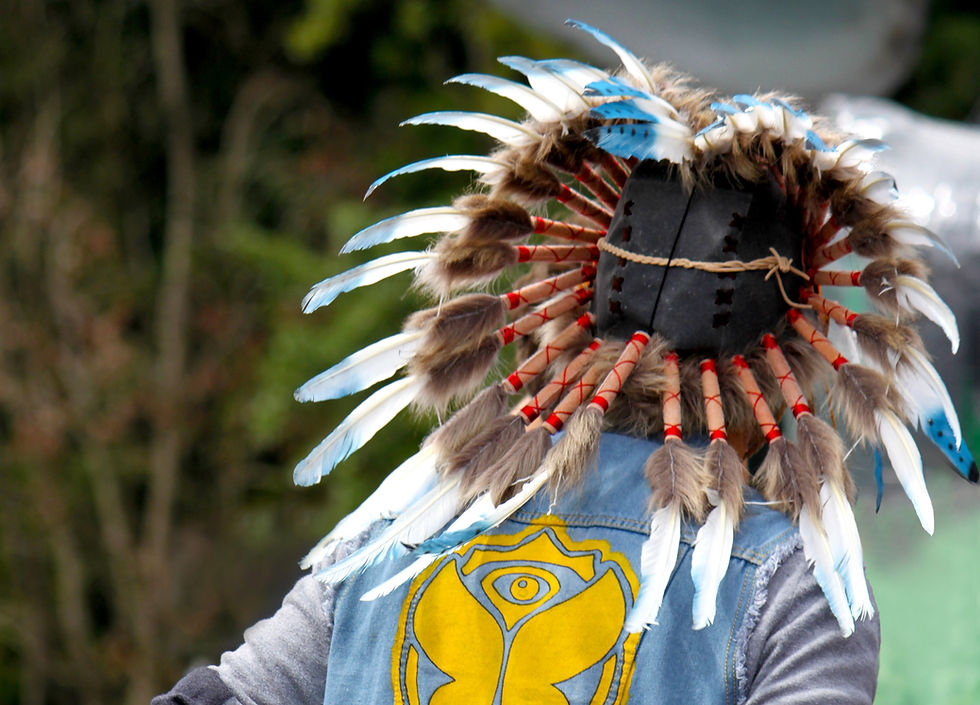
The Timeless Beat: From Maya to Rock. Watch the performers. Watch their feet. Listen to the drums.
ONE – two – three – four.
Thousands of years separate the musical traditions of the ancient Maya from rock & roll — and yet that four-beat pulse looks strangely familiar.
In Part 1 of our (Unauthorised 🙂) History of Music, Where Does Music Come From?, we travelled back towards the beginnings of music itself — long before guitars, orchestras, recording studios or even written music.
But that left another question. Where did the beat come from?
Rhythm is far older than written history and probably far older than
anything we would recognise as a musical instrument.
But perhaps we can look for a few clues.
And the first one is with us all the time.
Could It Be the Heartbeat?
Before music, we were surrounded by rhythm.
Heart beats – breathing - walking - left – right – left – right.
Run and the tempo increases. Slow down and the tempo falls.
Long before anybody knew what tempo meant, the human body was already producing regular pulses.
Could the heartbeat have helped shape our attraction to rhythm? Perhaps.
Walking, however, gives us something interesting:Two. Left and right. And four is simply two groups of two.
Could that help explain why rhythms based around two and four feel so natural when we walk, dance, clap or move together?
Again, we don't really know. But it's an intriguing thought.
Counting Out Time
Imagine our distant ancestors.
They had hands to clap, feet to stamp, stones to strike together and pieces of wood that made interesting sounds when you hit them.
At some point, humans discovered something rather important:
Making sounds together is fun. And a regular beat does something else. It allows a group of people to move together.
That matters for dancing, ceremony, communal work, marching and celebration.
It synchronises body movements and brainwaves. The beat simply existed.
The Beat of the Maya
Music played an important role in Maya ceremonial and public life.
Maya musicians used percussion instruments including drums and rattles, alongside whistles, flutes, trumpets and conch shells. Music accompanied dance, ritual, celebration and other communal activities.
And that's what makes the performers in The Timeless Beat so interesting.
ONE – two – three – four.
After all, everybody had feet.
Everybody had hands.
And most people could probably find something to hit.
Which brings us, somewhat unexpectedly, to John Wayne.
Meanwhile, Somewhere in the Wild West...
If you grew up watching old Hollywood Westerns, you'll probably remember the drums.
Our hero is riding through apparently empty country.
Everything becomes suspiciously quiet.
And then, somewhere in the distance:
BUM – bum – bum – bum.
BUM – bum – bum – bum.
John Wayne knew there was trouble coming.
And somehow those Hollywood “Indian drums” always seemed remarkably good at counting to four.
ONE – two – three – four.
But was this really an accurate representation of the music of the Indigenous peoples of North America? Not necessarily.
Native American musical traditions are enormously diverse. Different peoples developed their own songs, dances, instruments and rhythmic traditions.
What generations of cinema audiences often heard was something rather different: Hollywood musical shorthand.
Why did that simple, regular pulse work so well?
Perhaps because audiences already understood it instinctively.
But then something happened to those four beats.
The emphasis moved.
And popular music was never quite the same again.
It's Got a Backbeat...
Try counting:
ONE – two – three – four.
Now try:
one – TWO – three – FOUR.
Feel the difference?
Welcome to the backbeat.
The accent on beats two and four became one of the defining characteristics of rhythm & blues and rock & roll, usually driven home by the snare drum.
one – CRACK – three – CRACK.
The four beats haven't changed.
But the feel certainly has.
And Chuck Berry summed it up rather nicely in Rock and Roll Music:
“It's got a back beat, you can't lose it.”
He wasn't delivering a lecture on musical theory.
He was describing what made rock & roll move.
So Where Did the Backbeat Come From?
Modern popular music grew from cultures meeting, mixing and influencing one another over generations.
European musical traditions brought their own approaches to melody, harmony, instruments and musical meter to the Americas.
African and European traditions interacted in the Americas over generations.
From that enormous cultural mixture emerged spirituals, gospel, ragtime, jazz, blues and rhythm & blues.
And eventually:rock & roll.
But by the middle of the twentieth century, that emphasis on beats two and four had become irresistible.
Rock & roll carried it around the world.
John Wayne Meets Chuck Berry
So let's go back to our four beats.
The stereotypical old Hollywood Western gives us:
ONE – two – three – four.
Rock & roll gives us:
one – TWO – three – FOUR.
Same four spaces. Completely different feeling.
Perhaps John Wayne and Chuck Berry had more in common than either of them realised.
Four Beats Take Over the Dance Floor
Disco found another wonderfully effective use for our four beats — the four-on-the-floor bass drum:
BOOM – BOOM – BOOM – BOOM.
Ask anyone who has ever found themselves dancing to a disco record despite having absolutely no intention of doing so.
Electronic dance music took the idea even further.
But underneath?
ONE – two – three – four.
Again.
And What About Rap and Hip-Hop?
Hip-hop grew from African-American and Caribbean musical culture, particularly in New York during the 1970s. DJs discovered that they could isolate and extend the most rhythmically exciting parts of records — the breaks.
But try counting underneath many of them:
one – two – three – four.
There it is.
The timeless beat is still there
Why Four?
So after travelling from ancient percussion to the Maya, through Hollywood Westerns, blues and rock & roll, and on to disco and hip-hop, surely we can finally answer the question.
Why four?
We'll never know, but we can guess.
Back to the Maya
And that brings us back to where we started.
Watch The Timeless Beat: From Maya to Rock again.
ONE – two – three – four.
Maybe that's why it really is the timeless beat.
From ancient drums to blues.
From blues to rock & roll.
From rock to funk and disco.
From turntables to rap and hip-hop.
And whatever comes next?
There's a pretty good chance somebody, somewhere, will still be counting:
ONE – two – three – four...
Continue the Musical Journey
If you enjoyed this slightly unauthorised journey through the history of rhythm, take a look at Part 1: Where Does Music Come From? — our journey back to the earliest music, instruments and sounds created by human beings.
Unchained 7 — Original Music Without Borders
This blog was written with some help from Chatgpt



View in Full-Screen Here:
